YaoLab

CN
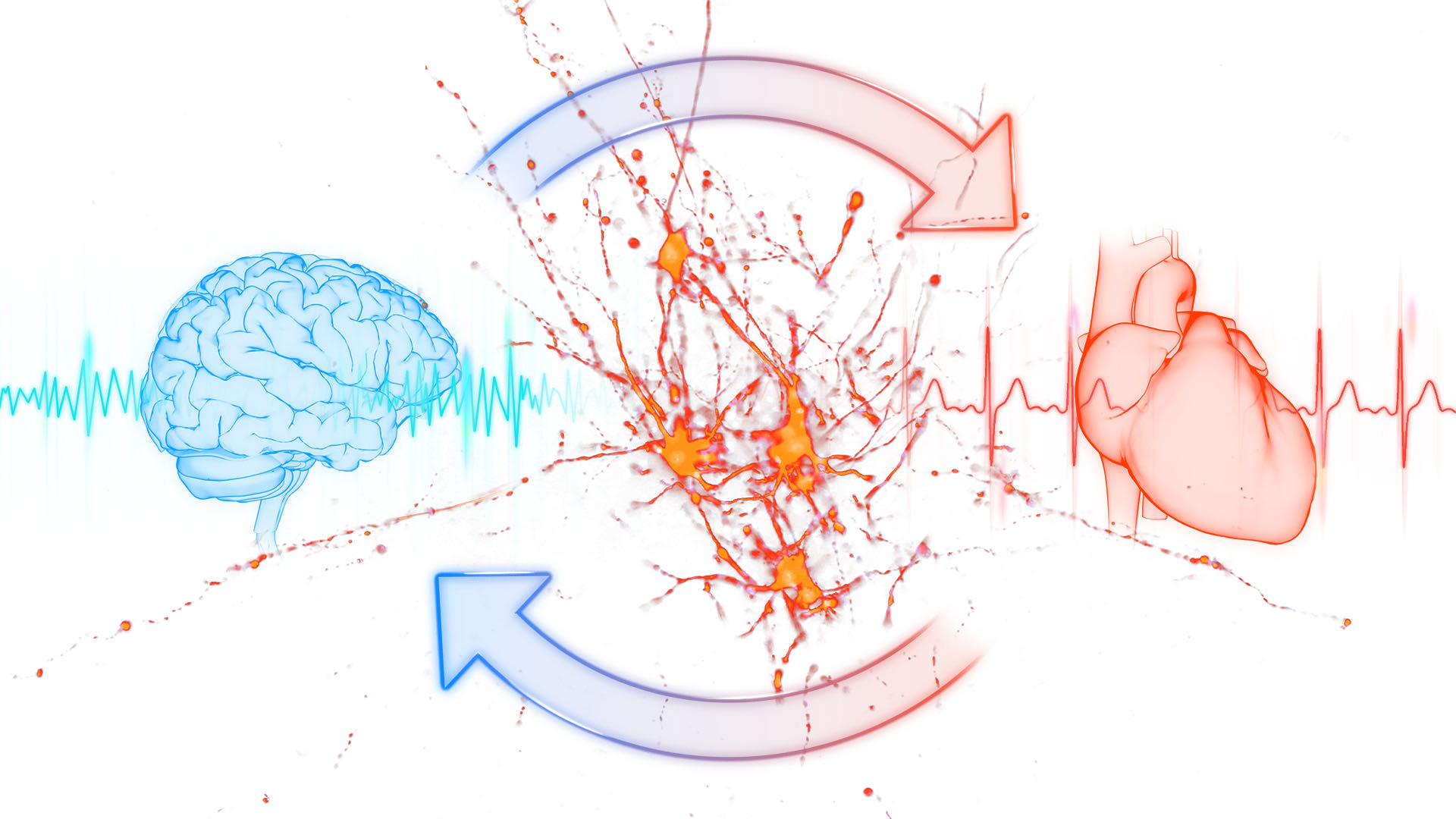
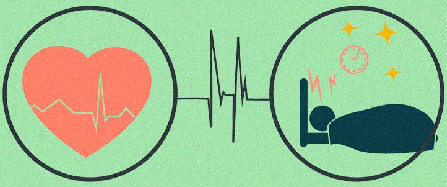
Cardiovascular diseases and sleep disturbances, which interact with and reinforce each other, have been two major health concerns in modern society. However, how sleep and cardiovascular activity interplay through the "brain-heart" axis remain unclear.
During postdoctoral research, Dr. Yuanyuan Yao discovered that cardiovascular baroreflex circuits regulate both sleep and cardiovascular activities. Our research group focuses on two main fronts, how sleep regulates cardiovascular activities and how changes in cardiovascular activity affect sleep. We commit to understand brain-heart abnormalities under pathological conditions and provide strategies for sleep disorders and cardiovascular diseases.
We use mice as the animal model and employ multiple approaches, including EEG/EMG recording, cardiovascular activity monitoring, echocardiography, in vivo neural activity recording, optogenetics and chemogenetics, neurotracing, spatial transcriptomics, single-cell sequencing, molecular genetic manipulation, as well as models of sleep disorders and cardiovascular diseases to understand the mechanisms of the "brain-heart" interaction.
Our lab welcomes those who are interested in the "brain-heart" interaction during sleep under both physiological and pathological conditions to join us, and to make a difference in tackling sleep disorders and cardiovascular diseases.
Sleep disturbances are strongly associated with cardiovascular diseases. Baroreflex, a basic cardiovascular regulation mechanism, is modulated by sleep-wake states. Here, we show that neurons at key stages of baroreflex pathways also promote sleep. Using activity-dependent genetic labeling, we tagged neurons in the nucleus of the solitary tract (NST) activated by blood pressure elevation and confirmed their barosensitivity with optrode recording and calcium imaging. Chemogenetic or optogenetic activation of these neurons promoted non-REM sleep in addition to decreasing blood pressure and heart rate. GABAergic neurons in the caudal ventrolateral medulla (CVLM)—a downstream target of the NST for vasomotor baroreflex—also promote non-REM sleep, partly by inhibiting the sympathoexcitatory and wake-promoting adrenergic neurons in the rostral ventrolateral medulla (RVLM). Cholinergic neurons in the nucleus ambiguous—a target of the NST for cardiac baroreflex—promoted non-REM sleep as well. Thus, key components of the cardiovascular baroreflex circuit are also integral to sleep-wake brain-state regulation.
An increasing number of pathogens are becoming resistant to antibiotics, posing a threat to human health. Therefore, understanding the host-pathogen interaction is necessary and urgent to unravel disease pathogenesis at the molecular level. We focus on the physical barrier of the epithelial surface, autophagy and the immune response, which are mediated by macromolecular complexes or organelles.
Using state-of-the-art cryo-electron tomography (cryo-ET), we aim to dissect the dynamic responses of these macromolecular complexes or organelles in unprecedented detail. By integrating microbiology, immunology, computational biology and engineering approaches, we aim to address the multifaceted nature of host-pathogen interactions from every angle.
An increasing number of pathogens are becoming resistant to antibiotics, posing a threat to human health. Therefore, understanding the host-pathogen interaction is necessary and urgent to unravel disease pathogenesis at the molecular level. We focus on the physical barrier of the epithelial surface, autophagy and the immune response, which are mediated by macromolecular complexes or organelles.
Using state-of-the-art cryo-electron tomography (cryo-ET), we aim to dissect the dynamic responses of these macromolecular complexes or organelles in unprecedented detail. By integrating microbiology, immunology, computational biology and engineering approaches, we aim to address the multifaceted nature of host-pathogen interactions from every angle.